
K as in Kitsch and Kara Walker, read Arde Gallery’s ABC to find out more about this concepts.
KITSCH | | When art embraces excess
Kitsch is excess—glossy, decorative, over the top. It’s what many would call “bad taste,” but when embraced intentionally, it becomes a sharp artistic tool. In contemporary art, kitsch is no longer hidden—it’s exaggerated, performed, and transformed.
Jeff Koons is one of the clearest examples of this approach. With his monumental balloon animals, oversized porcelain figurines, and gleaming sculptures, he elevates the banal into the spectacular. In Koons, kitsch isn’t a mistake—it’s a choice. A way to talk about consumer desire, visual culture, and the pursuit of artificial perfection.
At Arde Gallery, we recognize that art can be shiny, ironic, even uncomfortable. Kitsch disrupts the idea of what’s “right” or tasteful—and reminds us that sometimes, the most artificial image can reveal the most honest truth.
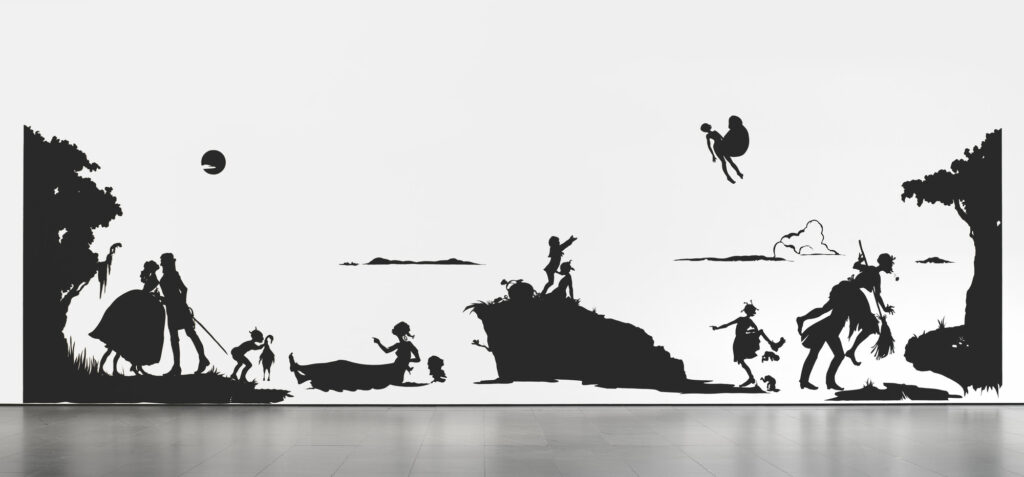
KARA WALKER | When art forces us to look directly
Kara Walker works with silhouettes. But they are far from innocent: her images depict slavery, violence, fragmented bodies. Using an apparently delicate aesthetic, she confronts the deepest wounds in American history.
Her work does not beautify—it disturbs, challenges, and disrupts.
Walker uses black and white as a symbolic battlefield. She cuts out figures, narratives, and symbols to address race, power, and gender. Each piece reclaims a history that has been misrepresented—retelling it with a new, unflinching voice.
At Arde Gallery, we value art that can disarm with beauty. Kara Walker reminds us that aesthetics are never neutral, and that art can be a powerful tool for remembering, denouncing, and reshaping collective memory.
 Spanish
  English